
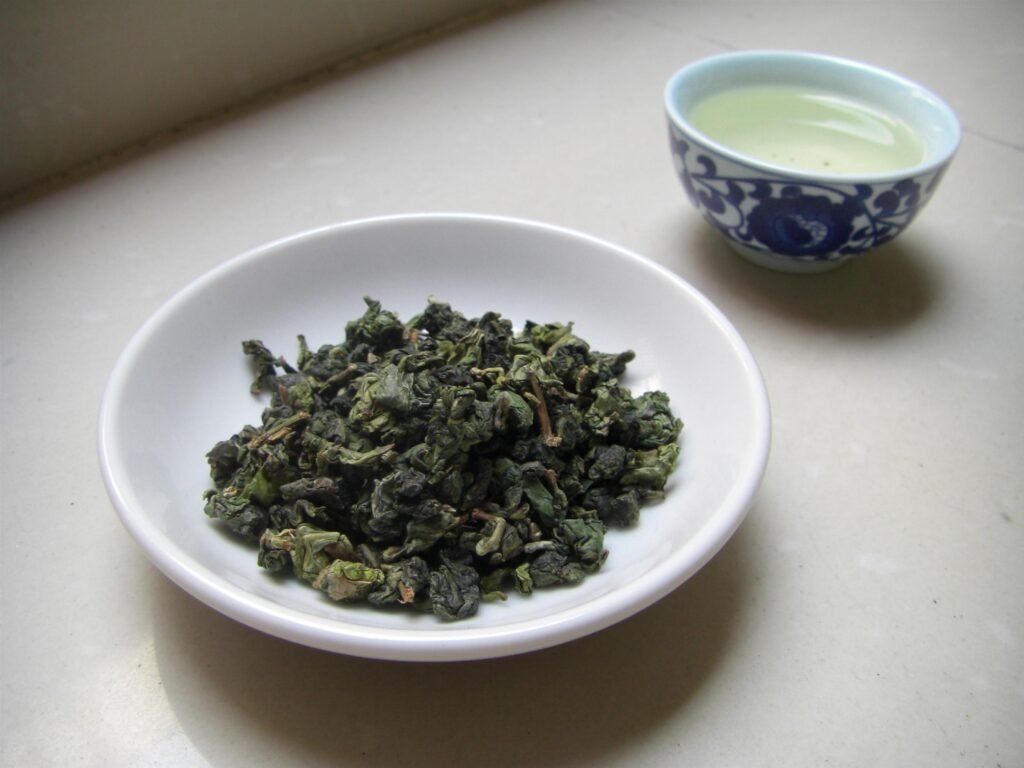
Oolong is the most complex category in tea. We oxidize it partway, anywhere from eight to eighty-five percent, which sets it between green and black while it belongs to neither. (Tea Guardian) The flavor range inside this one category is enormous, and the whole game of oolong is aroma.
What Defines It
Partial oxidation gives oolong its reach. Floral, creamy, buttery, fruity, roasted, mineral, all of it lives inside the category. The leaf is almost always whole, rarely broken. Some oolongs forgive a clumsy brew and some punish it. The heartland is Fujian and Guangdong in China and the high mountains of Taiwan.
The Styles
Lightly oxidized oolongs like Tieguanyin and the high-mountain Taiwanese teas come out green, floral, and fresh. They hold the brightness of a green while the touch of oxidation adds body and takes away the astringency. Heavily oxidized oolongs like Da Hong Pao and Dong Ding go dark, roasted, and rich. Dancong from Guangdong stands apart, single-bush teas with an aromatic complexity that is hard to believe until you smell it.
How It’s Made
Oolong runs on a controlled collision. We bruise the leaf just enough to start oxidation, then stop it before it finishes, and every choice along the way decides where on the green-to-dark spectrum the tea lands. (Tea Guardian) It opens with alternating sun and indoor withering to soften the leaf. Then the defining step, the tumbling and bruising (做青), where the leaves are tossed by hand or drum so their edges bruise and start to oxidize while the centers stay green. How hard and how long we bruise sets the final oxidation. Heat arrests it at the chosen point, which is where an eight-percent oolong parts ways with an eighty-percent one. We roll the leaf into shape, tight balls for the Taiwanese high-mountain styles, twisted strips for Wuyi rock oolong. A final roast is optional. Heavy roasting builds caramel and mineral depth in yancha, while a light hand keeps the fresh floral side of the greener styles.