
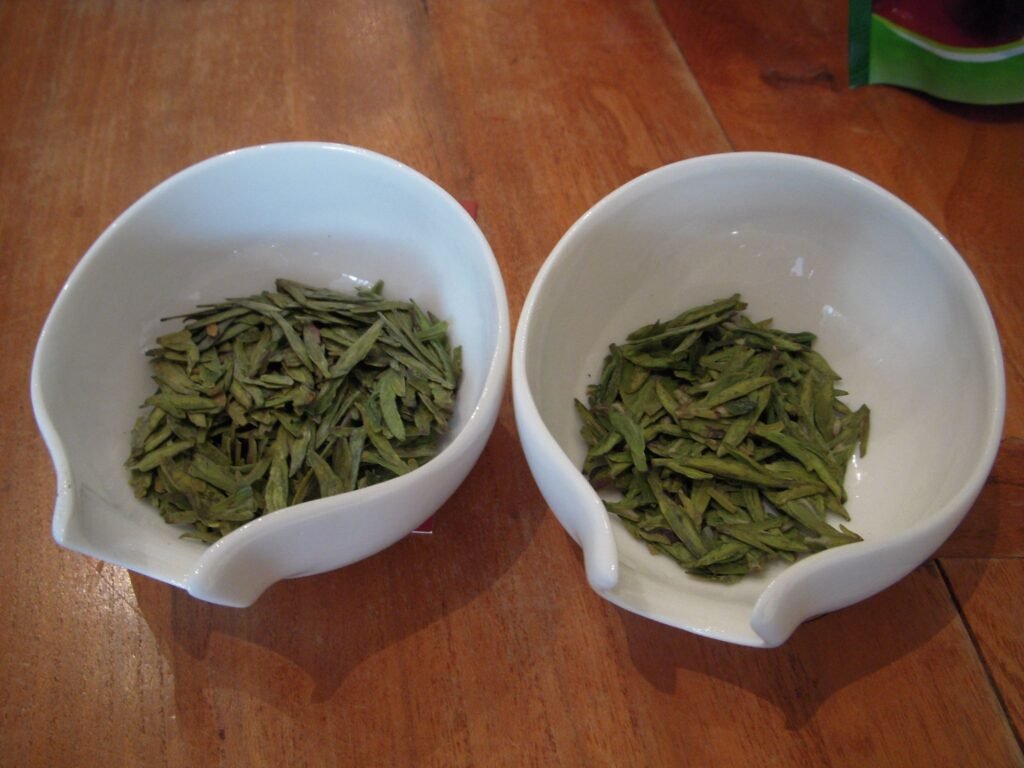
Green tea is the least processed of the true teas. We harvest, heat, shape, and dry it with as little intervention as we can manage. (Tea Guardian) The aim is to stop oxidation early and hold the leaf close to its living state. What you taste is fresh, vegetal, aromatic, and a long way from a supermarket bag.
What Defines It
Green tea is barely oxidized, under five percent, which is why it keeps that just-picked quality. The range runs from grassy and vegetal to sweet, nutty, and savory. It is the most temperature-sensitive tea we sell. Pour water too hot and a good green turns harsh in seconds. It also has the shortest shelf life of any category, so freshness is part of the quality. More than anything, the kill-green method, steaming or pan-firing, sets the flavor.
How It’s Made
The defining moment is kill-green (杀青 / shā qīng), the early heat that switches off the enzymes behind oxidation. Everything else works around it. A brief wither reduces moisture first, though some producers skip it. Then the heat, a wok or rotating drum in China (炒青, pan-firing), a steamer in Japan (蒸青). That single choice accounts for most of the gap between a Chinese green and a Japanese one. We shape the still-pliable leaf into needles, flats, or pellets, which changes how fast it gives up its flavor, then dry it to set the shape and finish the aroma.
Two Traditions
The clearest divide in green tea is how the kill-green happens. Pan-fired Chinese greens like Longjing (龙井) and Biluochun (碧螺春) pick up toasty, chestnut, sweet notes from contact with the wok. Steamed Japanese greens like Gyokuro (玉露) and Sencha (煎茶) come out grassy, marine, and full of umami. Neither is better. They are different teas from different hands. Shade-grown greens like Gyokuro and Matcha go further still. Starved of sunlight before harvest, they build chlorophyll and amino acids, which gives a richer, sweeter, less bitter cup.
Where It Comes From
Zhejiang, Jiangsu, Sichuan, and Anhui in China; Uji and Shizuoka in Japan; Jeju in Korea; Nantou in Taiwan. China makes the widest range by far, thousands of named regional greens. Japan makes fewer styles and takes each one to a consistency few can match.
Varieties We Cover
More coming soon.