Sachet in, water on
Water at about 90 °C — a boiled kettle left to sit for a minute or two. Boiling flattens the florals.

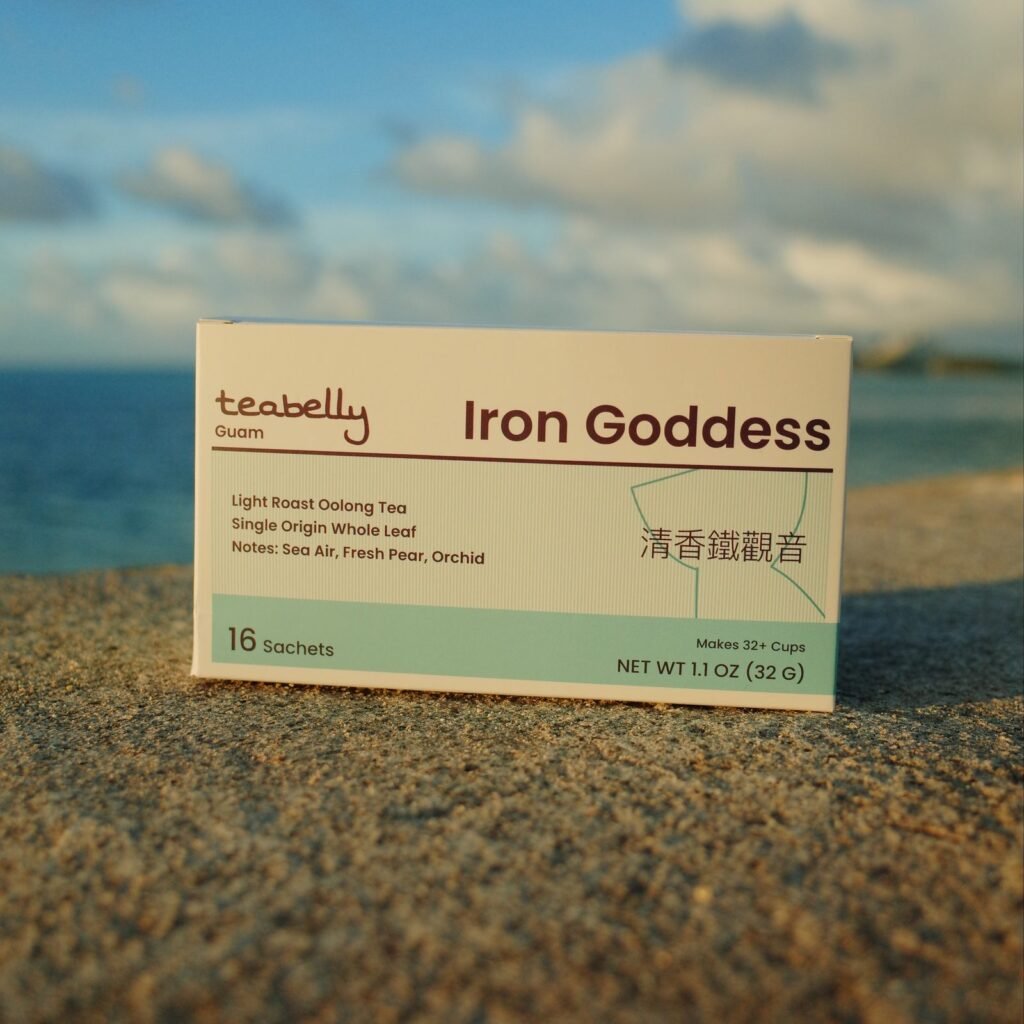
Light-roast oolong · Anxi county, Fujian · 16 whole-leaf pyramid sachets
Free pickup · Kwong Hwa Department Store, Maite
23 in stock
Item 10005-R16 · The same sachets we supply to hotels and cafés on the island. Running a café or a hotel? See the wholesale box of 50.
Tieguanyin (铁观音) takes its name from Guanyin, the Buddhist bodhisattva of compassion, and from the iron-rich soil of Anxi county in Fujian, where the cultivar was born and where its standard is still set. Anxi sits in the mountains of southern Fujian, where air off the Taiwan Strait meets high-altitude fog, and the tea carries a coastal freshness tea people call the Guanyin rhyme (音韵).
Ours is the light-fragrance style (清香), lightly oxidized and rolled into tight pellets that open slowly. The signature is its orchid fragrance — a floral aroma that occurs naturally in this cultivar — over a creamy sweetness and a clean finish that lingers. It does something a black tea can’t: each steep is a different cup, so topping up the mug gets you a second tea, not a weaker one.
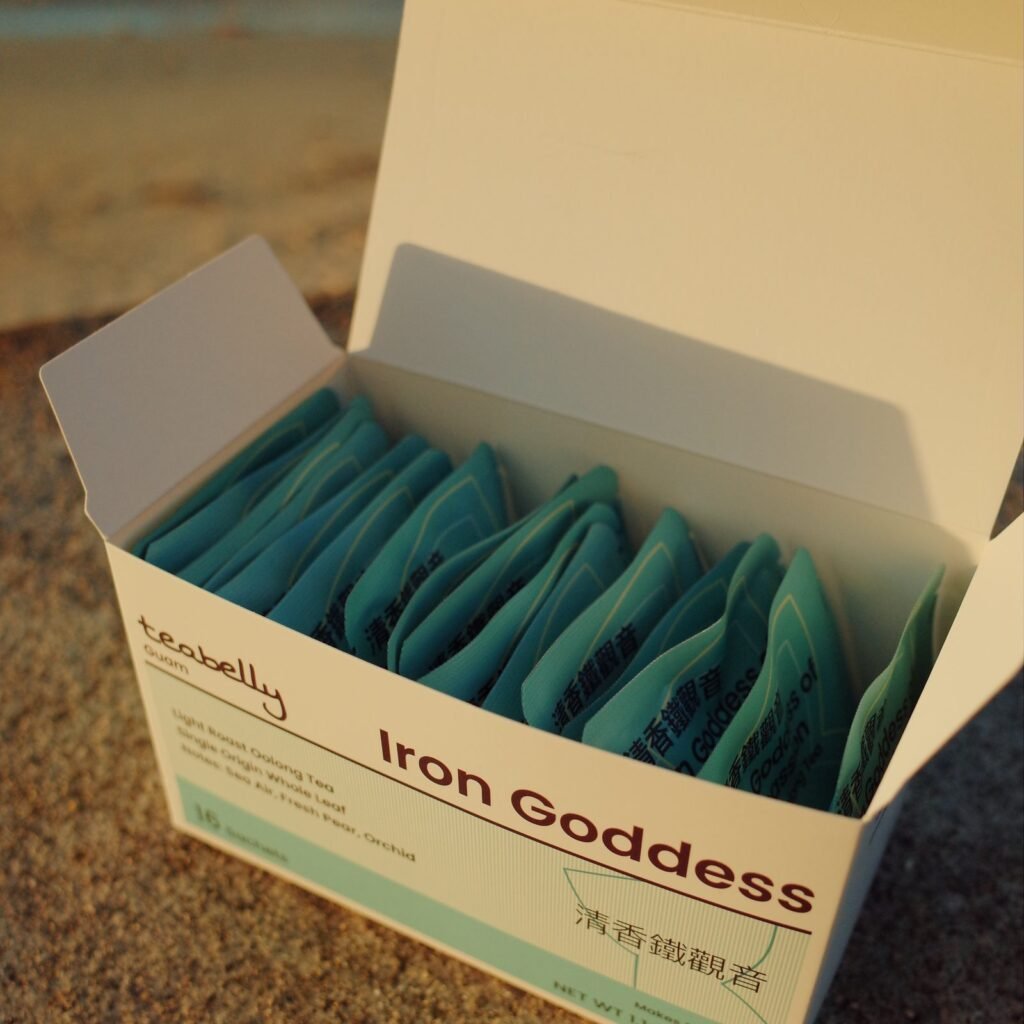
Rolled oolong needs a steep or two to unfurl. The first cup is the pellet waking up; the second is the tea. That is why we say leave the sachet in and top up — the leaf is built for it.
Two or three cups from one sachet is normal.
Cooler water than a black tea, and give the pellets time. Tieguanyin gets better as the leaf opens.
Water at about 90 °C — a boiled kettle left to sit for a minute or two. Boiling flattens the florals.
The pellets are still opening. Lift the sachet, taste, and keep it.
Same sachet, fresh hot water, a little longer. The second and third cups are where the orchid fragrance shows.
What is in the box, and nothing that isn’t.
We write the guides so you can buy tea with your eyes open — ours or anyone’s.
The rest of the Everyday range, in the same 16-sachet box.
Hotels, cafés and restaurants: tell us what you pour now and we'll send samples, pricing and a brewing plan for your equipment.