
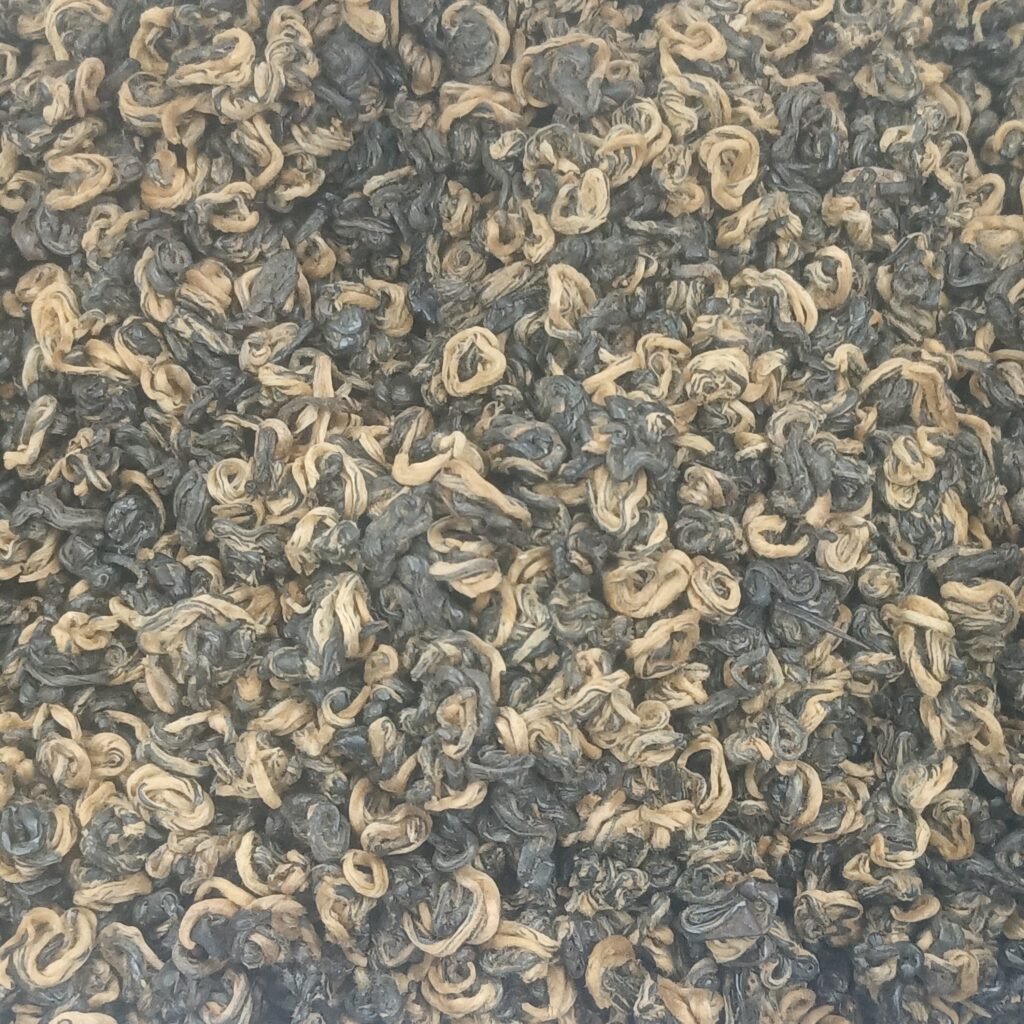
Black tea is fully oxidized. We wither the leaf, roll it, let it oxidize all the way, then fire it dry. (Tea Guardian) What comes out is rich and robust, with a long shelf life and a forgiving nature. It is the most consumed tea in the world, though most of that is broken leaf in bags. Whole leaf black tea drinks like something else.
What Defines It
The oxidation runs to ninety percent or more, and that is where the malt, honey, dried fruit, and cocoa come from. The flavors lean sweet and warming. Good black tea keeps well and rewards proper storage rather than fading with it. Where the leaf grew shapes the cup more than almost any other factor.
Where It Comes From
Yunnan and Fujian in China, Darjeeling and Assam in India, Sri Lanka, and Kenya each turn out black tea with its own character, shaped by altitude, soil, and local habit. The same plant gives a malty Assam and a muscatel Darjeeling because everything around it differs.
How It’s Made
Everything in black tea production serves one step, full oxidation. (Tea Guardian) The fresh leaf withers for several hours first, losing a fifth to a third of its moisture until it bends without tearing. We roll it to break the cell walls, which releases the enzymes and starts oxidation while it shapes the leaf. The rolled leaf rests in a warm, humid room as the enzymes work, turning copper-brown and building that deep malty character. Heat ends it. Firing arrests oxidation, locks in the flavor, and dries the leaf down to where it will keep.