
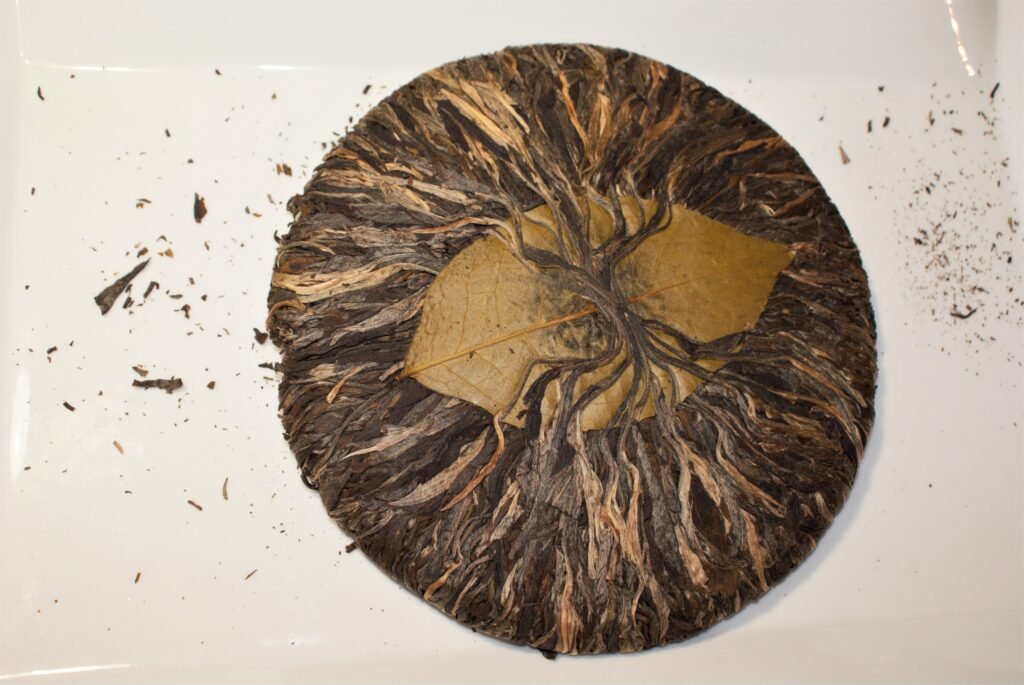
Fermented tea is where tea stops being a drink and starts behaving like a living thing. Through controlled microbial activity, slow and natural or fast and induced, (TeaDB) these teas build a complexity no other category reaches. Earth, depth, a medicinal warmth that people either fall for at once or take years to understand.
What Makes a Tea Fermented
Every fermented tea starts from Camellia sinensis leaf, but where green, white, and oolong rely on enzymatic oxidation we control or stop, fermented teas go through microbial fermentation. Bacteria, fungi, and yeast colonize the leaf and rework its chemistry over time. The process breaks down chlorophyll, turns catechins into heavier polyphenols, and produces the organic acids behind the signature flavors of earth, forest floor, dried fruit, mushroom, and leather, and in aged examples something close to indescribable.
Two Paths
Fermentation takes one of two roads. Raw or natural (生) ferments slowly, over years or decades in storage, evolving from bitter and astringent toward floral, then fruity, then deep and complex. Sheng pu’er is the benchmark. Cooked or accelerated (熟) uses wet-piling (渥堆, wòduī), a controlled forty-five to sixty days that stands in for decades of aging. It drinks earthy, mushroomy, dark-fruited, and smooth from the first day. Shou pu’er and Fu brick are the ones to know.
The Major Categories
Pu’er (普洱茶) from Yunnan is the most famous, made from large-leaf assamica off old trees and pressed into cakes, bricks, and tuocha nests. It splits into sheng and shou, and it is the most collectible tea in the world. Liu Bao (六堡茶) from Guangxi runs dark and earthy with a distinct betel-nut note (槟榔香), once shipped to Malaysian tin miners for its digestive reputation. Fu Brick (茯砖茶) from Hunan and Shaanxi is pressed and deliberately seeded with Eurotium cristatum, the golden-flower fungus (金花), whose spores sweeten and mellow the tea rather than spoil it. Ya’an border tea (雅安边茶) from Sichuan is built from mature leaf and compressed rugged enough to survive the journey into Tibet. Aged Guangdong oolong is roasted oolong left to ferment for decades in the humid south, keeping its oolong bones under the earthiness.
How It’s Made
Every fermented tea starts from the same base, mao cha (毛茶), a sun-dried Yunnan big-leaf green. (Tea Guardian) From there the road splits. The fresh assamica leaf is processed like green tea but sun-dried rather than heat-dried, which preserves the microbial life that aging needs. For sheng, we steam and compress the mao cha into cakes and store them, and time does the rest, months to decades of slow change. For shou, we wet-pile the mao cha (渥堆), moistened, heaped, and covered, where microbial fermentation drives the heat up to sixty degrees and rewrites the chemistry in forty-five to sixty days. Both then steam and press into cakes (饼茶), bricks (砖茶), or tuo bowls (沱茶). Shou drinks soon. Sheng rewards patience.
Go Deeper
Fermented tea is a world of its own. When you are ready to go further, we have written a full guide to the most celebrated of them all.