
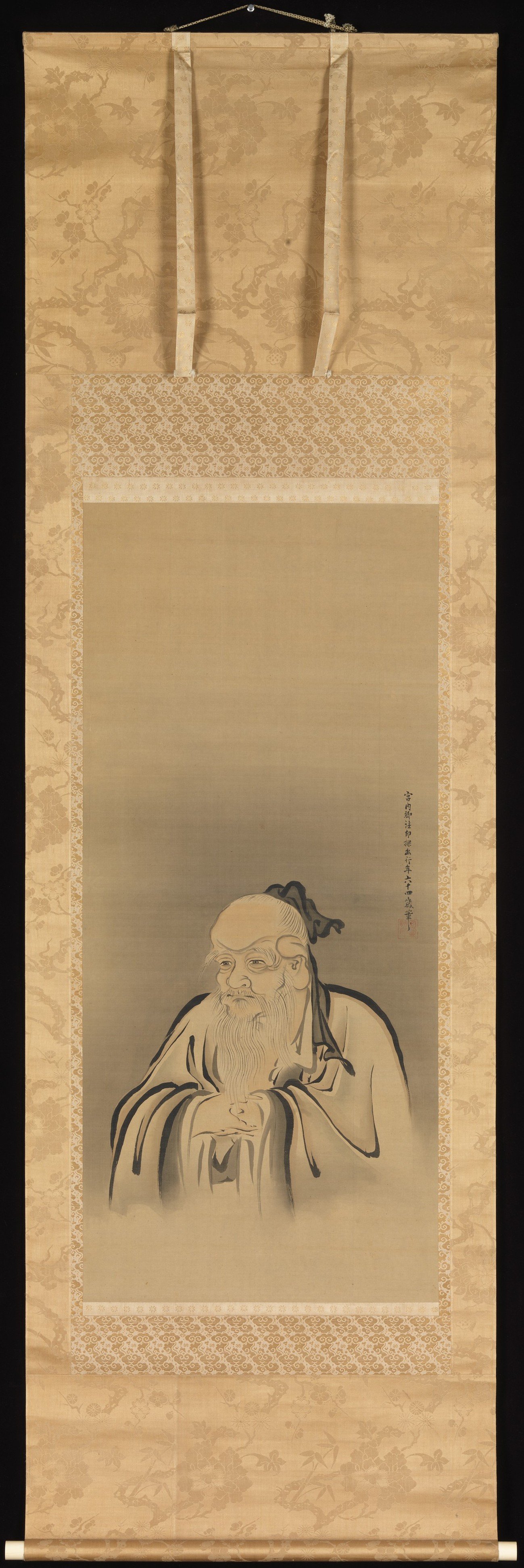
The story starts with a man sitting under a tree, boiling water, roughly 2737 BCE. A dead branch catches fire. A few leaves fall from an overhead shrub into his clay pot. The water turns amber. He drinks it.
That man was Shennong, the Divine Farmer, one of the mythological three sovereigns of ancient China. His name appears in texts as early as the first century BCE, credited with tasting hundreds of plants and cataloguing their properties. Whether any individual called Shennong actually existed is beside the point. What the myth records is something real: someone, somewhere in what is now Yunnan or Sichuan, noticed that the leaves of Camellia sinensis changed water. That moment started everything.
The Myth That Became History
The earliest confirmed physical evidence of tea dates to the Western Han dynasty, roughly 2,100 years ago, found in the tomb of Emperor Jing (Liu Qi, died 141 BCE) at the Han Yangling mausoleum near Xi’an, in Shaanxi province. Researchers identified the carbonized leaves as tea by detecting theanine, an amino acid found almost only in the tea plant. But the tea being consumed then bore no resemblance to what we drink today. Leaves were compressed into cakes, then ground and boiled, often with scallions, ginger, orange peel, and salt. The result was closer to a medicinal broth than a beverage.
This phase of tea is worth understanding on its own terms. It was functional before it was pleasurable. Compressed cakes made tea stable enough to store and transport. The flavor, stripped of additives and judged on its own, was an idea that would take another thousand years to develop.
Tea Before Tea Was Tea
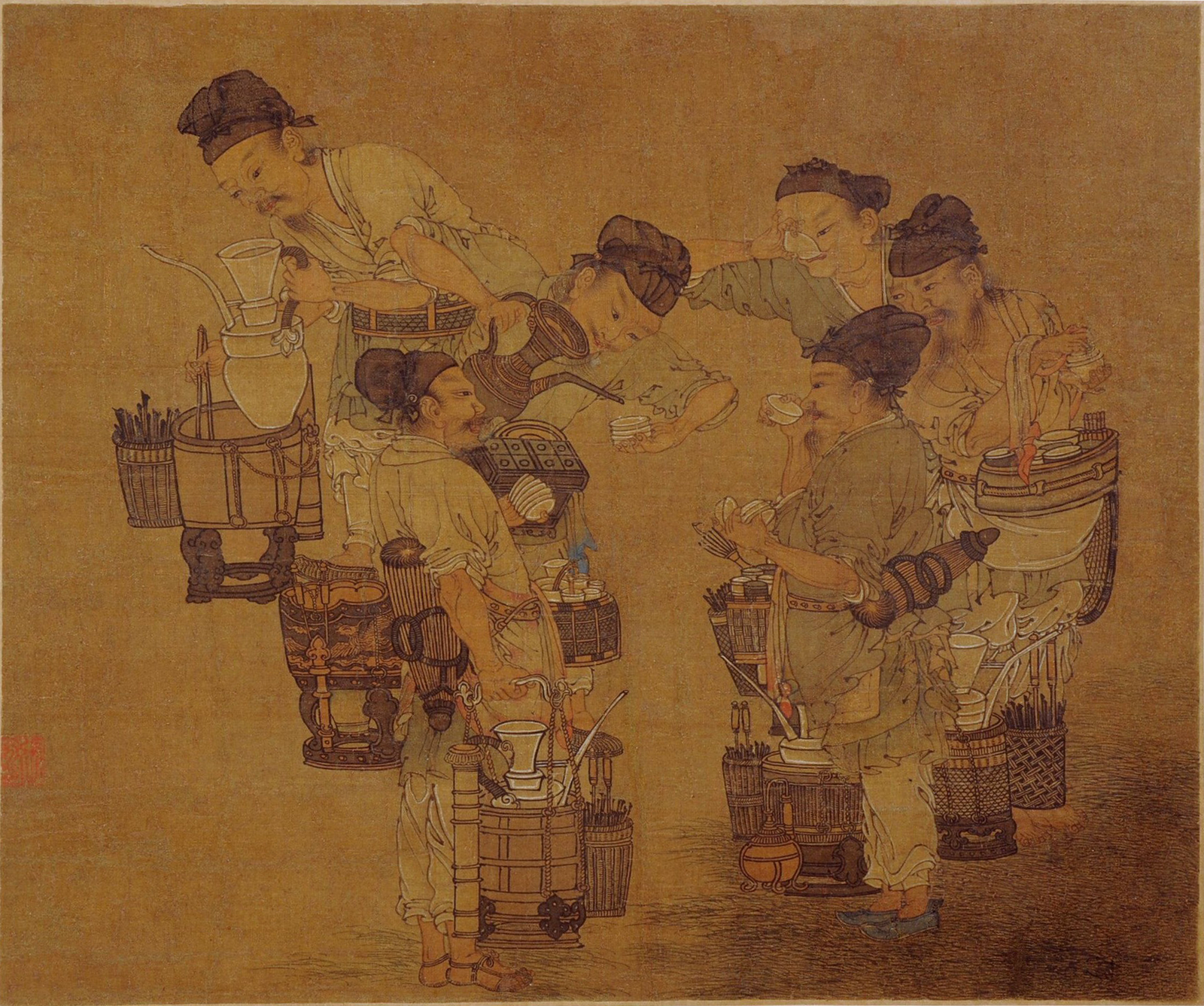
By the Song dynasty (960–1279 CE), tea had evolved into something closer to ceremony. The dominant preparation was dian cha, powdered tea whisked in a bowl with hot water. Tea competitions became a legitimate aristocratic pastime, with participants judging the color, foam, and aftertaste of each entry. The Song court consumed tea with an intensity that bordered on obsession. Emperor Huizong wrote an entire treatise on it.
Dian cha eventually died out in China, but it survived across the water. The Japanese monk Eisai brought seeds and the whisking method back from China in 1191. What became matcha in Japan is the Song dynasty’s dian cha, preserved. China moved on. Japan did not, and the world is better for it.
Lu Yu and the Book That Changed Everything
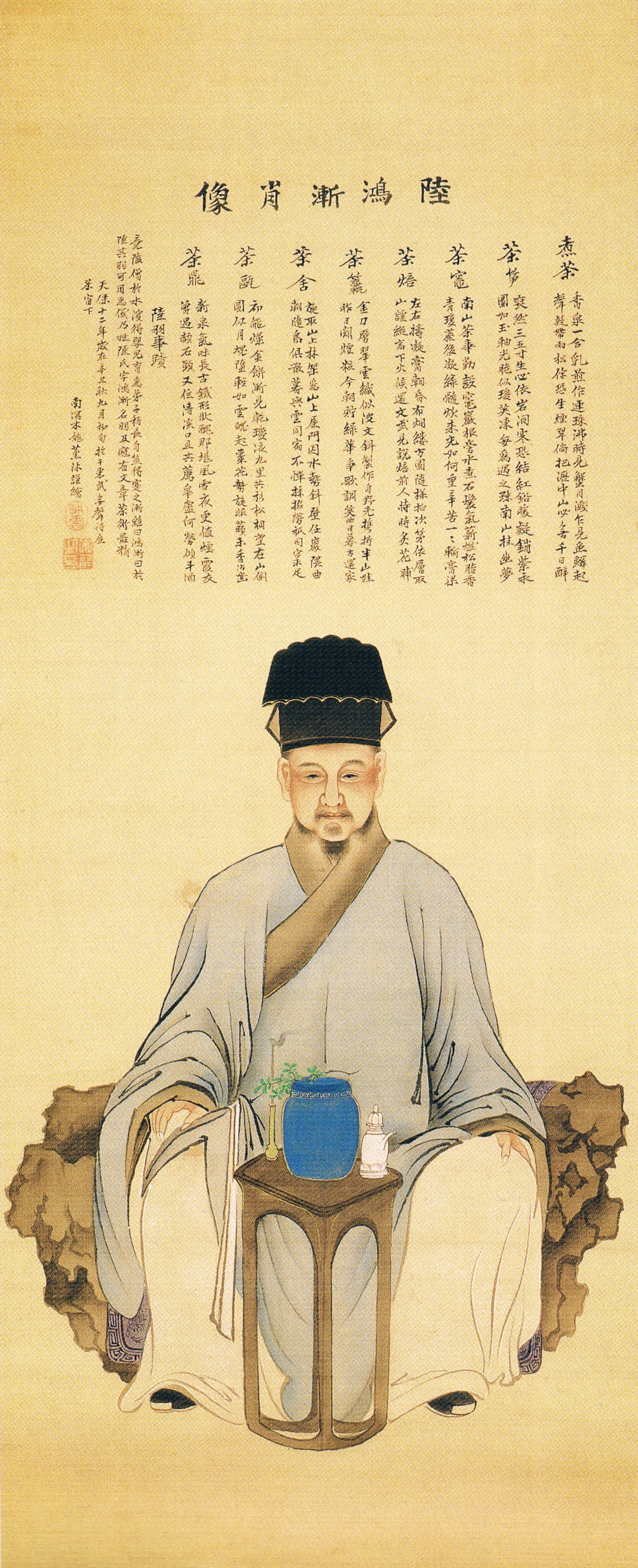
In 780 CE, a man named Lu Yu (陸羽) published three volumes called the Cha Jing, the Classic of Tea. It covered cultivation, processing, brewing, tasting, and the philosophy of tea consumption with a thoroughness that had never been attempted before. Lu Yu argued that tea should be judged on its own terms: no salt, no additives, clean water, the right vessel, full attention.
The Cha Jing did not simply describe tea culture. It created the framework Chinese tea culture has operated from ever since. Lu Yu holds the title 茶圣, Sage of Tea, and the title is accurate. Before him, tea was medicine and habit. After him, it was a practice.
The Road That Moved Tea West
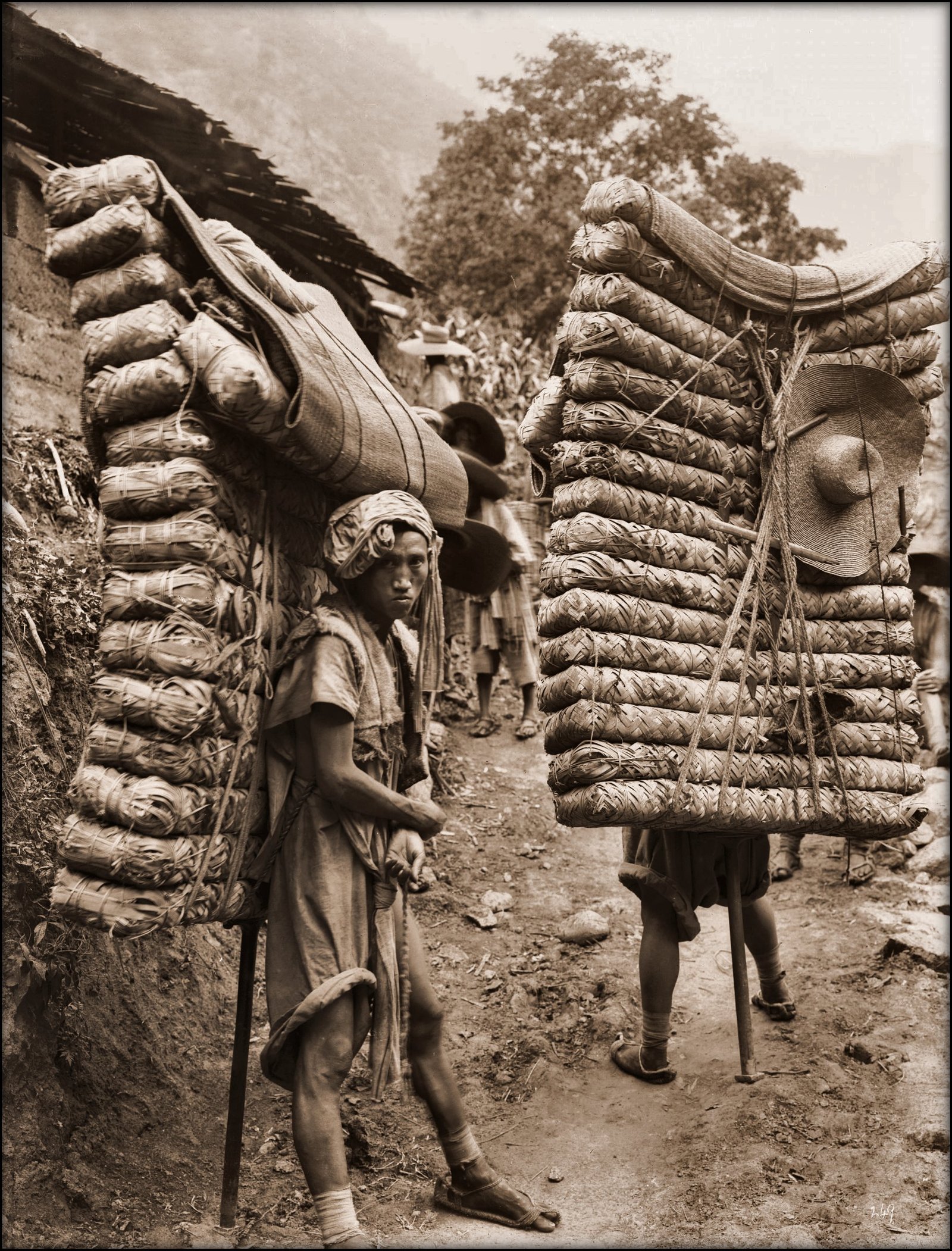
From the Tang dynasty onward, caravans carried compressed tea bricks from Yunnan and Sichuan through Tibet and into Central Asia along the 茶马古道, the Ancient Tea Horse Road. The name is literal: tea was traded for horses. Tibetan armies needed horses from the lowland provinces. Tea-producing regions needed Tibetan warhorses. The exchange was mutual, large-scale, and lasted for over a thousand years.
Tea reached the Arab world through this network by the 9th century. Dutch East India Company ships began importing it to Europe from Fujian province in the early 1600s. By 1650 it had reached England. Within a century, tea had reshaped British colonial policy in India and Ceylon so thoroughly that entire nations were restructured around producing it at scale. All of that began in Yunnan, with a leaf and a compressed brick.
The Invention of Oolong
Oolong as a category was invented in Fujian’s Wuyi Mountains, most likely during the Ming dynasty (1368–1644). The exact origin is disputed, several villages in Wuyi claim it, but the logic of the process is clear. Producers discovered that allowing leaves to wither and lightly bruise before firing produced a flavor complexity that neither green nor black tea could achieve. Partial oxidation creates something in between: the freshness of green tea, the depth of black, and a floral-roasted character that is entirely its own.
The technique spread south to Anxi, where Tieguanyin (Iron Goddess of Compassion) was developed during the Qing dynasty, and then to the high mountains of Taiwan centuries later. Oolong remains the most technically demanding category to produce. A harvest window of hours, not days. Oxidation levels calibrated by hand, eye, and smell. That difficulty is exactly why oolong produces some of the most interesting flavors in any beverage.
The Gaiwan Changes Everything
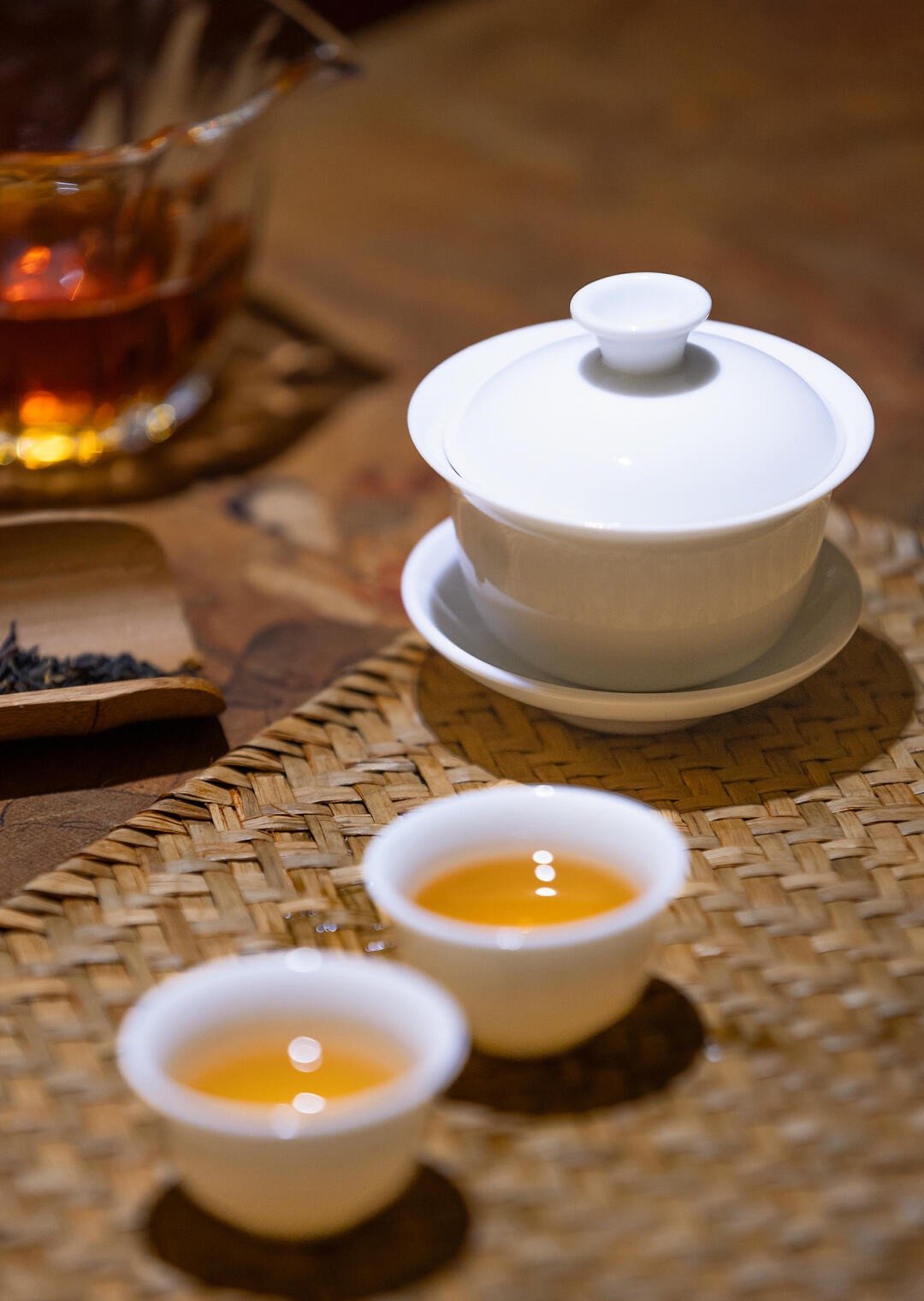
The gaiwan, literally “lid-bowl”, emerged as the dominant brewing vessel during the Ming dynasty after the Hongwu Emperor banned the production of compressed tea cakes in 1391. Loose-leaf tea replaced compressed tea virtually overnight, by imperial decree. The method of consumption had to change with it.
The gaiwan solved the problem. A bowl that holds heat, a saucer that insulates your hand, a lid that tilts to filter the pour. No moving parts. It lets you see the leaves, smell the wet aroma between steeps, and control the pour precisely. Every serious Chinese tea tradition runs through the gaiwan. It is simultaneously the simplest and most revealing brewing vessel ever designed.
Tea Today
Tea is now the second most consumed beverage on earth after water. That statistic flattens a great deal: it counts the same leaf Lu Yu wrote about and the industrial teabag in the same column. What they share is Camellia sinensis and not much else.
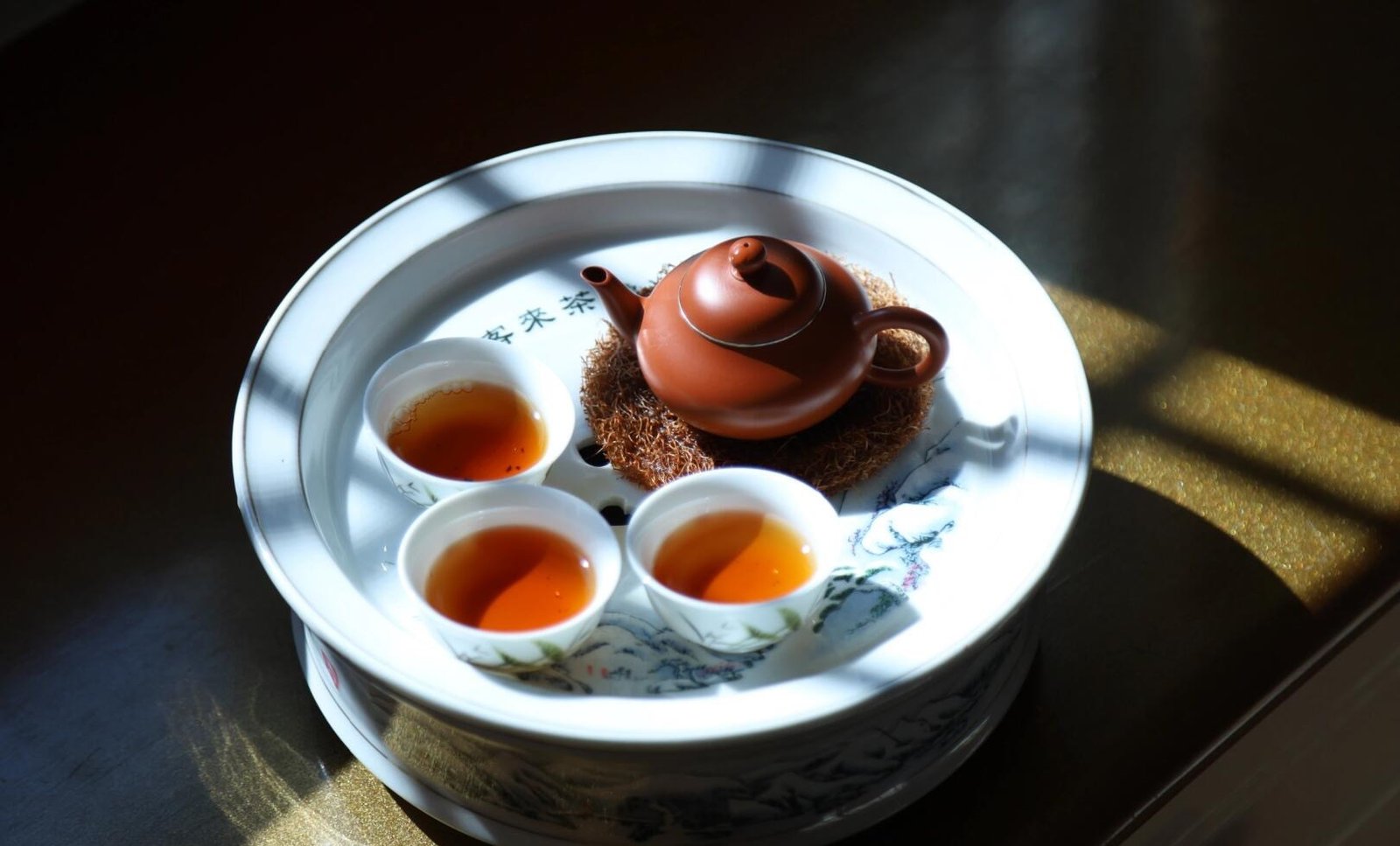
What Chinese tea culture has preserved, and what we think is worth passing on, is the practice of paying attention to the leaf. Gongfu brewing, built around a high leaf-to-water ratio and multiple short steeps, is designed to extract everything a tea offers over time rather than all at once. The Chaozhou tradition, with its small pot and three cups, is its most refined expression. It assumes tea deserves your full attention. Most things worth understanding do.
Sources
- Lu, H. et al. (2016). “Earliest tea as evidence for one branch of the Silk Road across the Tibetan Plateau.” Scientific Reports, 6, 18955. Earliest confirmed physical evidence of Camellia sinensis consumption; Han Yangling tomb analysis confirming tea via theanine.
- Lu Yu (780 CE). Cha Jing (Classic of Tea). English translation: Francis Ross Carpenter (1974). The Classic of Tea: Origins & Rituals. Ecco Press. Primary source for Tang dynasty tea culture and Lu Yu’s framework.
- Benn, J. (2015). Tea in China: A Religious and Cultural History. University of Hawaii Press. Tang and Song dynasty tea culture; Buddhist monastic role in spreading tea practice.
- Anderson, E.N. (1988). The Food of China. Yale University Press. Tea development from medicinal preparation to cultural beverage across dynasties.
- Rose, S. (2010). For All the Tea in China. Viking Press. Tea trade routes, East India Company history, and the westward expansion of Chinese tea.
- Huang, H.T. (2000). Science and Civilisation in China: Biology and Biological Technology, Part V: Fermentations and Food Science. Cambridge University Press. Processing history of compressed tea, origin of oolong, and the Ming dynasty loose-leaf transition.