
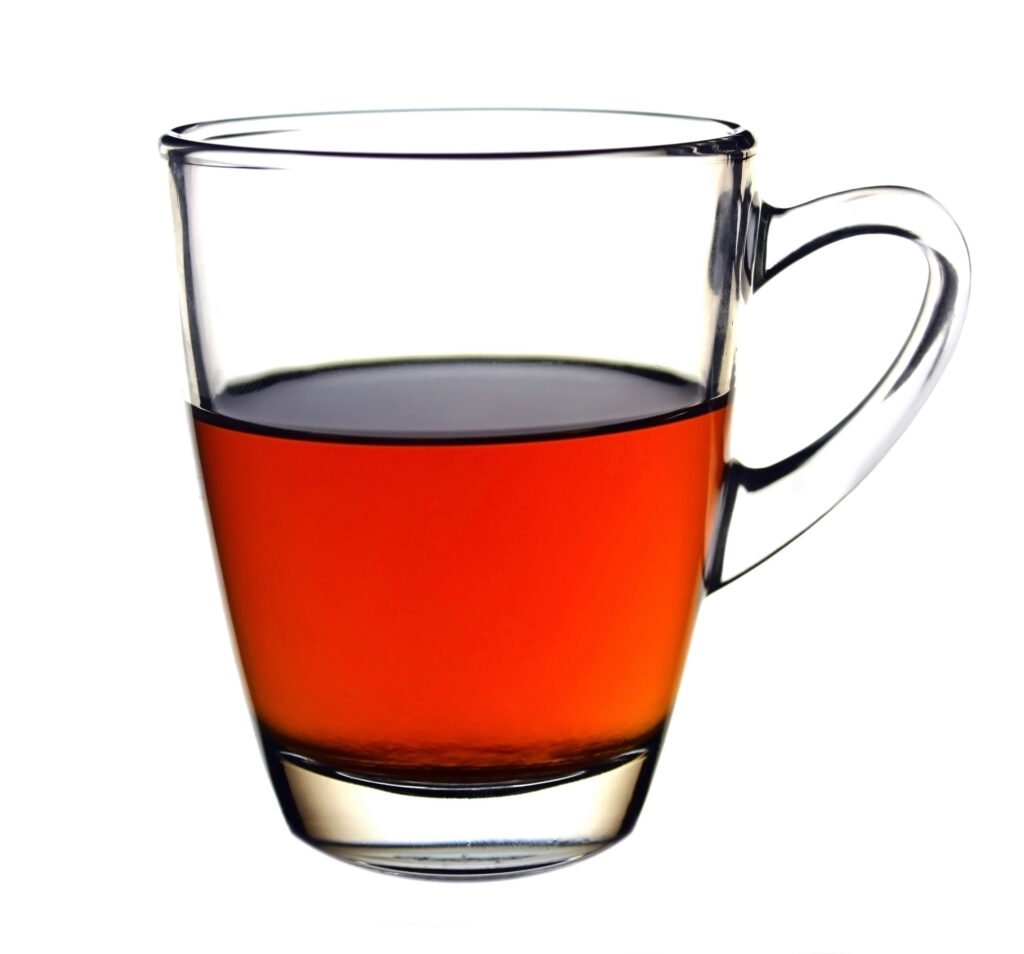
Tea drunk is real. It won’t hit you like a drug, and a teabag won’t get you there. But steep the right tea the right way and the shift is hard to ignore.
What is Chaqi?
Chaqi (茶气) translates roughly to tea energy. In Chinese tea culture it describes the physical sensations certain teas produce beyond plain caffeine stimulation, a warmth spreading through the body, a calm alertness, a mild euphoria, a pleasant lightheadedness. The name for the feeling itself is cha zui (茶醉), which means tea drunk. It is not the same as a caffeine buzz. Coffee gives you stimulation. Chaqi gives you something closer to focused stillness.
What’s Actually Happening
The honest answer is that the science is incomplete. We understand some of the mechanisms, but chaqi as a whole experience has never been studied as one phenomenon. What we do know is that three compounds in tea interact in unusual ways.
L-Theanine (L-茶氨酸)
L-theanine is an amino acid found almost only in the tea plant (Camellia sinensis). It crosses the blood-brain barrier and raises alpha brain wave activity, the same frequency recorded during meditation. It also shifts neurotransmitters, boosting GABA (gamma-aminobutyric acid, which calms neural activity) and tempering glutamate (which excites it). Its effect on alpha waves and GABA is well documented. [1]
The Caffeine-Theanine Synergy
Tea carries caffeine and L-theanine in the same leaf. Research has shown that the two together improve sustained attention beyond what either does alone. [2] The result is a state that is alert and calm at once. This is the chemistry behind what tea drinkers have described for centuries.
Polyphenols and the Empty Stomach
Tea polyphenols, catechins especially, can briefly slow glucose absorption. On an empty stomach that creates a mild, passing dip in blood sugar, and with it dizziness, warmth, and a floaty feeling. It is why you so often hear the warning against drinking strong tea on an empty stomach. Part of the tea drunk feeling traces back to this.
A Note on What We Don’t Know
We won’t claim chaqi is fully understood. The individual compounds are well studied, but how they combine into the specific experience practitioners describe has not been isolated in clinical research. Most of what we know about which teas bring on the strongest chaqi comes from centuries of practitioner observation rather than controlled studies.
Some claims in the tea world, like the idea that old-growth trees produce stronger chaqi because deep roots reach rare minerals, are plausible but unproven. We include them because they are widely observed, and we draw a line between established science and informed tradition.
Why Aged White Tea and Sheng Puer
These two categories bring on the strongest tea drunk among experienced drinkers, and the reasons differ for each.
Sheng Puer (生茶)
Raw puer from old-growth trees in Yunnan is widely held to be the most potent tea for chaqi. Research shows raw puer keeps more L-theanine than ripe shou puer, since the wet-pile fermentation behind shou degrades amino acids. [3] Minimal processing leaves the leaf’s original chemistry more intact.
Old-growth trees (古树, gushu) have grown for decades or centuries, and their roots reach soil nutrients younger plantation bushes never touch. Whether that translates to higher concentrations of active compounds is not proven, but the link between old-growth material and stronger chaqi is one of the steadiest observations in Chinese tea culture. It is anecdotal, and it is also close to universal among serious practitioners.
Age matters too. As sheng puer ages, some amino acids decline while other compounds transform. [4] The changing chemistry of a well-stored aged sheng is part of why it gives a deeper chaqi than a young sheng off the same material.
Aged White Tea (老白茶)
White tea goes through little processing, which leaves a high baseline of amino acids. Research has found it holds notably high levels of GABA compared with other tea types. [5] GABA is a neurotransmitter that lowers neural excitability.
As white tea ages, oxidation and Maillard reactions reshape its chemistry. [6] The old saying, one year’s tea, three years’ medicine, seven years’ treasure (一年茶,三年药,七年宝), captures the way its effects seem to grow over time. The complexity deepens rather than fades.
One caveat. Whether GABA taken by mouth crosses the blood-brain barrier well is still debated, while L-theanine clearly does. So aged white tea’s chaqi may owe more to its whole biochemical profile shifting with age than to any single compound. We don’t have a clean answer yet, and we would rather say so than pretend otherwise.
How to Get Tea Drunk
Start with the right tea. Aged sheng puer, ten years or more from quality material, and aged white tea, five years or more, are the most reliable, and young sheng off old-growth trees can hit hard too. Dancong and high-mountain Taiwanese oolong deliver now and then, less predictably. Brew gongfu style, since a high leaf-to-water ratio over short steeps concentrates the active compounds. A gaiwan with 7 to 8 grams to 100 to 120ml is a good start, and several steeps across twenty to thirty minutes let the effect build gradually.
Drink on a light stomach rather than an empty one, because the blood-sugar dip turns uncomfortable when there is nothing there, and don’t sit down to it straight after a heavy meal either. A small snack beforehand is fine. Slow down. Chaqi builds across steeps, and rushing defeats the point, so give it fifteen to thirty minutes at least. Pay attention, since half of chaqi is noticing it, and scrolling your phone between steeps will cost you the onset. Keep plain water on hand, because dehydration sharpens the dizziness and dulls the good part.
Being Honest About It
Chaqi is not a psychedelic experience, and it is not comparable to cannabis, psilocybin, or any controlled substance. Anyone who tells you otherwise is selling something or overstating their afternoon. What chaqi offers is subtle and real, a warmth behind the eyes, a looseness in the shoulders, a clarity that feels unhurried.
We think chaqi is worth talking about because it is a genuine part of the tea experience. We would still rather undersell it and let you find it honestly than overclaim it and lose your trust. The best chaqi we have felt arrived when we weren’t looking for it.
Sources
- Baba, Y. et al. (2024). “L-theanine: From tea leaf to trending supplement.” Nutrition Research. ScienceDirect. L-theanine mechanisms, GABA modulation, alpha brain wave activity.
- Nobre, A.C. et al. (2008). “L-theanine, a natural constituent in tea, and its effect on mental state.” Asia Pacific Journal of Clinical Nutrition. Caffeine and L-theanine synergy on sustained attention.
- Syu, K.Y. et al. (2008). “Determination of theanine, GABA, and other amino acids in green, oolong, black, and Pu-erh teas with dabsylation and high-performance liquid chromatography.” Journal of Agricultural and Food Chemistry. PubMed. Theanine and GABA across tea types.
- Ye, J. et al. (2020). “Classification of raw Pu-erh teas with different storage time based on characteristic compounds.” LWT – Food Science and Technology. ScienceDirect. Amino acid and compound changes during puer aging.
- Zhao, M. et al. (2011). “Determination and comparison of GABA content in pu-erh and other types of Chinese tea.” Journal of Food Composition and Analysis. PubMed. GABA content comparison across tea types, white tea finding.
- Huang, Y. et al. (2025). “Exploring the effects of compressing and aging processes on functional components and flavor of white tea by omics methods.” Journal of the Science of Food and Agriculture. Wiley. Chemical transformations during white tea aging.