
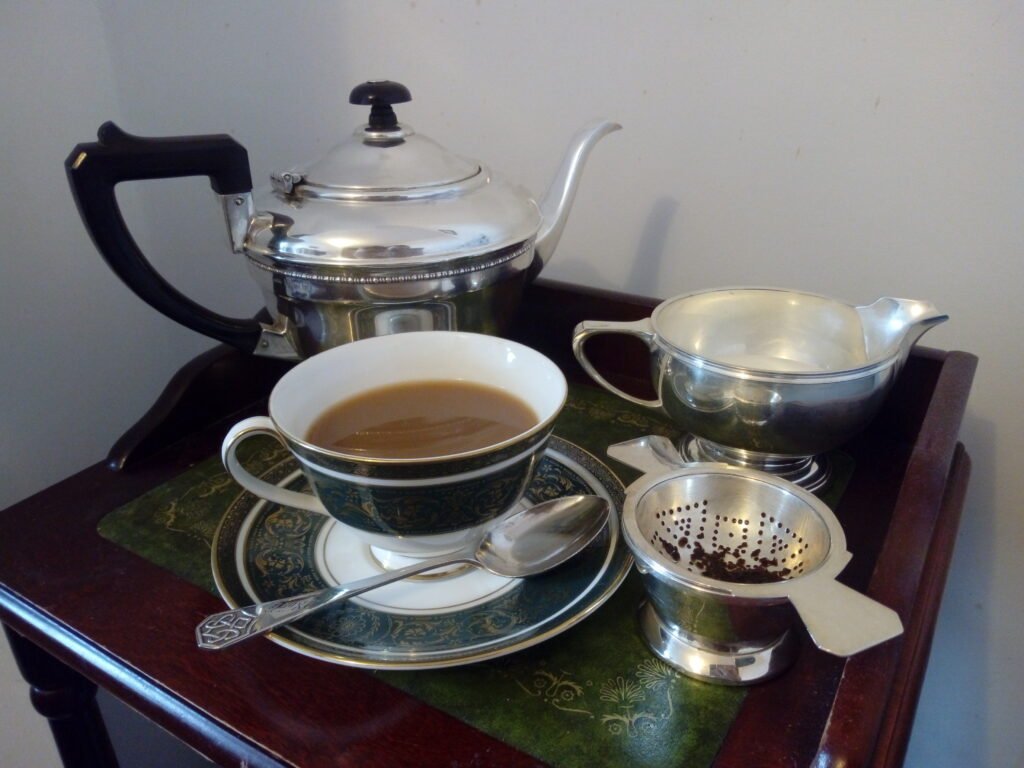
The Western teapot is straightforward: more water, less leaf, one long steep. It is not the most expressive way to brew, but it is consistent, scalable, and it works for everyday drinking when you aren’t trying to analyze the cup. (Tea Guardian) It is also the right call for a crowd.
How It Works
The basic approach is 2 to 3g of leaf per 200ml of water, steeped two to five minutes, one infusion and done. It is the method most people outside East Asia grow up with, and it makes a perfectly good cup when the parameters match the tea. The catch is that it leaves no room to adjust mid-steep. Over-steep and the cup turns bitter and you start over, which is why temperature and timing matter more here than in gongfu brewing. You get one shot.
Steep Guide
| Tea Type | Temperature | Time | Leaf Amount |
|---|---|---|---|
| Green tea | 65–80°C | 1.5–2 min | 2g per 200ml |
| White tea | 85–95°C | 3–4 min | 2–3g per 200ml |
| Light oolong | 85–90°C | 2–3 min | 3g per 200ml |
| Roasted oolong | 95°C | 3–4 min | 3g per 200ml |
| Black tea | 85–95°C | 2–3 min | 2–3g per 200ml |
| Shou pu’er | 95–100°C | 3–5 min | 3–4g per 200ml |
| Tisane / herbal | 100°C | 5–7 min | 4–6g per 200ml |
When It Works Best
Black tea is the strongest case for the Western teapot. A good Keemun, Yunnan Dian Hong, or Assam brewed this way at the right temperature makes a rich, full-bodied cup. Add milk if you like. The method suits the tea. Shou pu’er works well too, since it is forgiving, stands up to a long steep, and the volume is welcome when you are sharing or want a big mug. The Western teapot is also right when you just want tea without thinking about it, while reading, working, or hosting. Some sessions are about the cup, not the process.
The Honest Tradeoffs
The Western method extracts the tea in a single steep, which gives you one dimension of it, usually the most accessible one. High-quality oolongs, aged teas, and complex pu’er that unfold over eight to ten gongfu steeps will read as flat brewed this way. It isn’t a worse tea, just less of it, with all the character that builds across steeps mixed into one pot. For everyday teas and casual drinking, that is fine. For teas you have invested in, the ones with a story, a terroir, a season, gongfu brewing returns more on what you paid. Know which cup you are making, and brew it that way.